No Trees
No Seas
For thousands of years, the British Isles were home to vast forests that swept across the land, right to the sea’s edge. Two separate worlds, divided by the shoreline.
What we couldn’t see were the forests sending life to the sea, and the sea giving life back to the forests. Not two separate worlds, but a single living system. Trees and seas connected in ways we’re only now beginning to understand.
When we cut down the forests, we severed that connection. And our seas have been suffering ever since.
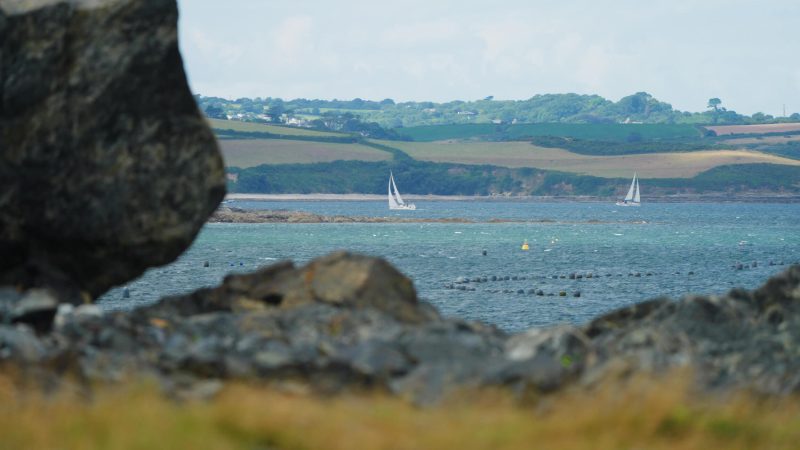
For generations, we’ve treated our seas and forests as two separate ecosystems.
But a groundbreaking scientific review by the Woodland Trust and Dr Benjamin Phillips has uncovered the invisible threads binding them together. And shown how trees and seas rely on each other to survive.
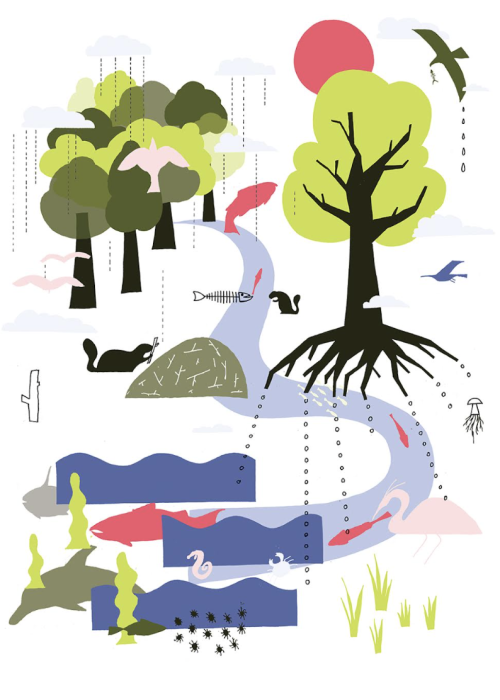
The review reveals how forests send nutrients downstream to feed the sea and increase fish stocks. Salmon and seabirds carry nutrients back to help the forests thrive. And forests protect the sea, keeping waters cool and clean.
But without enough trees, the system becomes unbalanced. Rainfall rushes straight from land to sea, carrying pollution and sediment that smothers marine life. Seagrass, kelp, plankton and fish populations all suffer. And forests don’t get the nutrients that salmon and seabirds would bring back from the sea. Both sides of the system are failing.
The science is clear:
to heal our seas,
we must restore our forests.
The benefits flow far beyond the land. We now know that woodland restoration also gives us cleaner seas, thriving marine habitats and recovering fish populations. Restore our forests, and we can bring the whole system back to life.
Introducing the flowscape
Now we have a new way of seeing trees and seas – not as separate, but flowing into one another. And we need a new way to talk about it.
We’re calling it a flowscape: a living system where life and energy flow from forest floors into headwaters, rivers and estuaries, all the way out to the deep ocean and back again.
There are hundreds of flowscapes across Britain – each one connecting a headwater catchment to the sea. And each one needs restoring.
Once you see flowscapes, you can’t unsee them. And once you understand them, the solution becomes clear.
There’s no time to waste. Restoring forests is one of the most powerful things we can do to heal our land AND our seas.
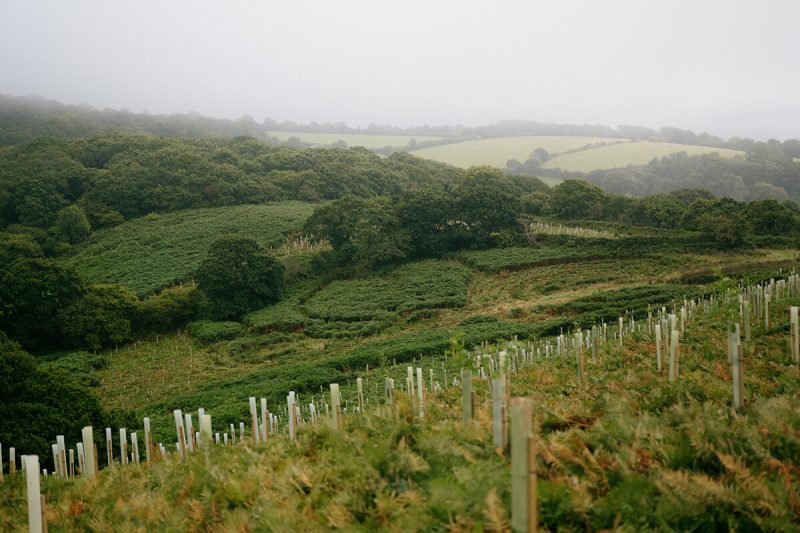

Plant One has a proven model to make this happen.
We’re not just planting trees, we’re creating fish forests – species-rich, biodiverse woodlands that will feed and protect our oceans for generations to come.
But we can’t do this alone. We need to get this science into the hands of conservation organisations, landowners, businesses, communities and governments. We need people to see that healthy oceans start with healthy forests. And we need to move fast.
Your support helps us create more fish forests in Cornwall and spread this message further and faster.
Where does the money go?
Your support funds Plant One’s woodland restoration in targeted flowscape areas across Cornwall – our fish forests.
Why Cornwall: The wet Atlantic climate creates ideal conditions for temperate rainforest growth. This makes Cornwall one of the best places to restore flowscapes and create fish forests to help heal our seas.
Our goal: Restore 500 hectares of fish forests in the next five years.
What we need: £300,000 to make it happen.
What your money funds:
- Restoring woodlands and creating fish forests
- Building partnerships with landowners and NGOs to amplify and measure the impact.
- Creating educational content that spreads the flowscape message.
- And covering the operational costs that make all of it possible.
Your support doesn’t just plant trees, it plants fish forests that help rebuild the connections between land and sea.
No Trees No Seas is proudly powered by…