We’ve always drawn lines
between our ecosystems:
forest, river, estuary, ocean.
Separate worlds, each with their own beginning and end.
But what if we told you those lines don’t exist in nature?
We’ve always drawn lines
between our ecosystems:
forest, river, estuary, ocean.
Separate worlds, each with their own beginning and end.
But what if we told you those lines don’t exist in nature?

In a groundbreaking scientific review of over 270 studies, the Woodland Trust and Dr Benjamin Phillips uncovered an invisible flow connecting them all. Nutrients flow from forest floors, along rivers and estuaries, out to the deep ocean and back to the forests again. The forests and the sea rely on each other to survive. We just couldn’t see it. Until now.
This is why our oceans are struggling. We’ve lost more than 70% of our woodland cover in the UK, and only 7% of what’s left is healthy.
Without healthy forests, our seas are dying.
But the review also uncovered hope. When we restore forests – particularly temperate rainforests in places like Cornwall and Devon – we can heal our seas too.
This science changes everything we know about how to restore nature
Conservation has always worked in silos, rarely looking beyond traditional boundaries – different teams, different funding, rarely talking to each other. The science shows why this approach isn’t working. Land and sea aren’t separate, and we can’t keep treating them that way.
We need to widen our field of view and start working at a completely different scale. It’s a fundamental shift in how we approach restoration. And this shift in thinking needs a new way to talk about it. We’re calling it a flowscape.
What is a flowscape?
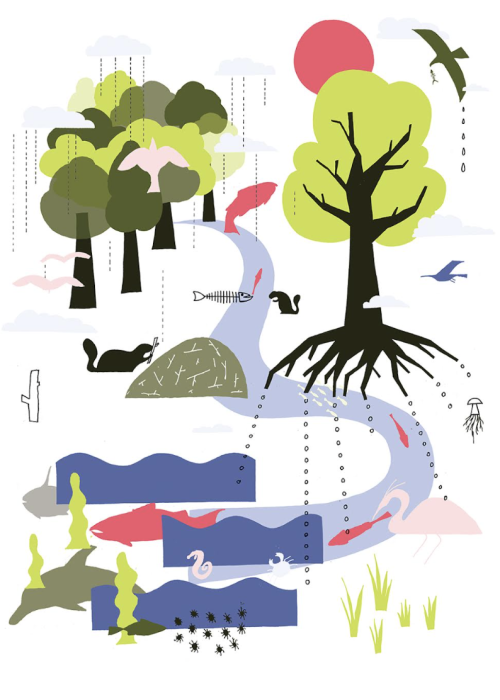
A flowscape is a living system made up of forests, rivers, the sea and the water that flows between them. There are hundreds of flowscapes across Britain, each one is defined by the river that runs through it.
Let’s take the Fal in Cornwall. Rain falls on land – hills, farmland, woodlands – and flows into streams. It gathers in the Fal River, flows into the estuary, and out to sea and all the way to the deep ocean.
In a healthy flowscape, as rain soaks through forest floors, it picks up nutrients from decaying leaves and soil. As water carries those nutrients to the sea, forest roots filter pollution and tree canopies keep the water cool. The nutrients feed plankton, plankton feed fish, and the ocean thrives on food sent from the forest.
Then the return journey begins. Salmon return upstream to spawn and seabirds nest in the trees, both returning ocean nutrients to feed the forest. Water flows down, life flows back up. The cycle completes.
The science uncovered three key ways this happens.
For each one, we’ll look at how it should work, what’s happening now, and what becomes possible when we restore them.
There’s an ancient Japanese proverb: ‘if you want to catch a fish, plant a tree.’ It sounds like folklore, but science proves it’s right. And it could be the key to restoring fish stocks.
In a healthy forest, you’ll find a thick carpet of decaying leaves, wood and soil. This carpet acts like a giant tea bag, brewing a kind of ‘forest tea’, rich in fulvic acid and iron. Rain washes this tea into headwaters, and from there it flows downstream to the ocean. And this is what keeps the ocean alive.
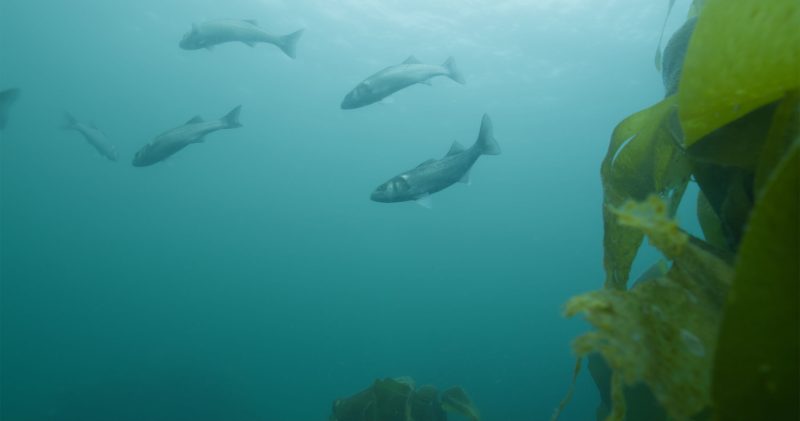
Because plankton need those exact nutrients to thrive. Plankton feeds small fish. Small fish feed bigger fish. Everything in the ocean depends on this microscopic foundation. When plankton populations collapse, the entire food web goes with them.
Japanese fishers have known this for generations, creating a movement called Uotsuki-rin, or “Fish Forests” where they plant trees specifically to feed their fishing grounds. Studies back this up: plankton biomass can be up to 10 times higher in estuaries with healthy forested land upstream.
Because we’ve cut down so much of our woodland, the balance of nutrients is off. Without enough of these nutrients, the ocean is quite literally starving. Plankton populations are collapsing and fish numbers are worryingly low.
More woodlands and healthy forests means more food for the ocean. Plankton populations recover, and fish stocks rebound. It’s that direct: healthy forests mean healthy fisheries.
Salmon and seabirds begin their lives connected to the forest – salmon hatching in forest streams, seabirds nesting in trees. We’ve always marvelled at the vast distances they travel to feed before returning home. What we’re only now understanding is why: they’re repaying the forest for what it gave the sea.
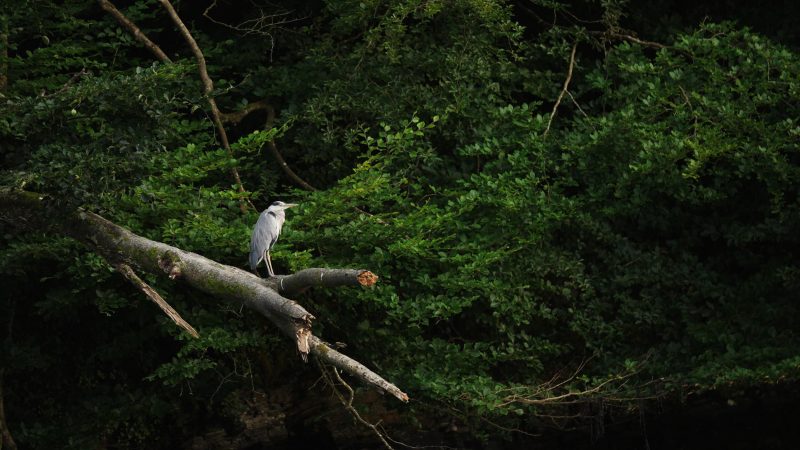
Death and droppings are at the heart of the nutrient cycle.
Salmon return to the stream where they were born, they spawn, then die. As their bodies decompose on the riverbed, they release nitrogen and phosphorus into the soil.
Seabirds live to tell the tale: after feeding at sea, they return to quite literally drop ocean nutrients back onto the forest floor. Both are bringing home what the forest once gave to them.
When this works, the effect is remarkable: trees along salmon-rich rivers grow up to three times faster. In some forests, up to 25% of the nutrients come directly from the ocean.
Britain’s salmon have collapsed to critical levels. We still have seabirds and otters keeping these connections alive, but the cycle is breaking and forests are missing a vital source of nutrients.
Restore the forests, and we give these animals back their homes. Spawning grounds for salmon. Nesting sites for seabirds. More food for both. If we can restore this part of the cycle, we may even see something Cornwall hasn’t witnessed for generations – salmon spawning in our rivers once again.
For decades, we’ve tried to save our seas by protecting the ocean itself. Protected marine areas, fishing quotas, plastic reduction. All necessary and important. But the research reveals we’ve been missing something fundamental: the health of our seas depends on what’s happening upstream, in the forests.
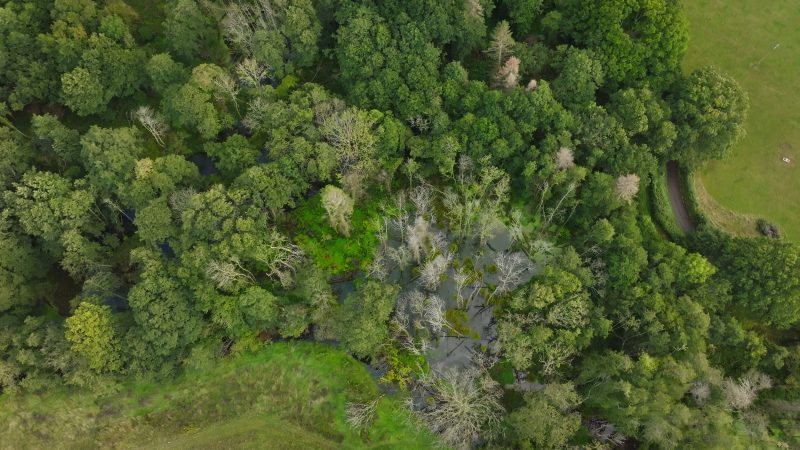
Forests are the ocean’s protectors. They filter, cool, and slow water before it reaches the sea. Their roots hold soil in place, preventing sediment, heavy metals, and excess nutrients from washing into rivers and estuaries.
Their canopies shade streams, keeping water cool.
And the forest floor acts like a giant sponge, absorbing rainfall, allowing it to soak gradually into the ground rather than racing straight off the surface.
This matters enormously for seagrass and kelp. These habitats need clear, cool, clean water to survive. And these habitats are foundations for entire marine ecosystems.
We’re losing a football field of seagrass every 30 minutes worldwide. Up to 60% of kelp forests have been degraded in the past 50 years. Without forests to protect them, these habitats are being smothered, and our ocean’s nurseries are dying.
Restore the forests, and water quality improves. Seagrass and kelp can recover remarkably quickly in the right conditions. And with them comes everything they support, nurseries for fish, carbon storage, the habitat holding up the entire marine food chain. Healthy forests mean healthier, cleaner seas.
Bring back the trees, and we can restore the flow. More food for forests and fish. Less pollution and sediment washing into the sea. Marine life can recover, and forests can once again thrive. can do for our oceans too.
This science clearly shows what we must do: To heal our seas, we must restore our forests.
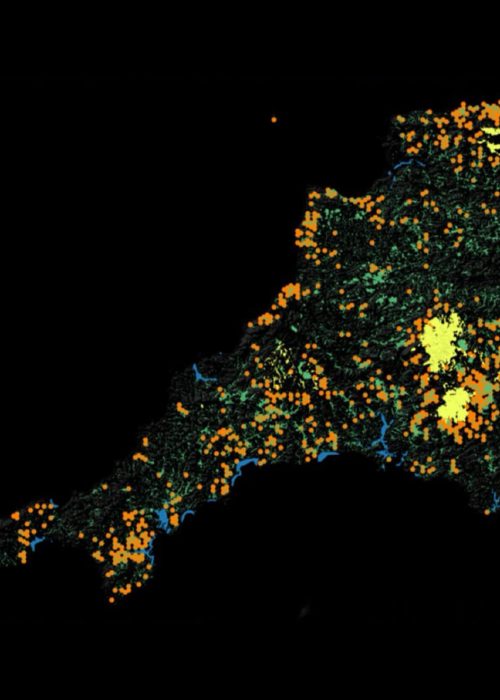
Flowscapes need critical mass – enough forest cover in an area to filter water, send nutrients downstream and support the species that carry them back. Cornwall’s wet Atlantic climate creates ideal conditions for temperate rainforest growth. It’s one of the best places to begin planting fish forests at scale.
Species-rich, biodiverse woodlands, planted in areas that will have the greatest impact on the flowscapes.
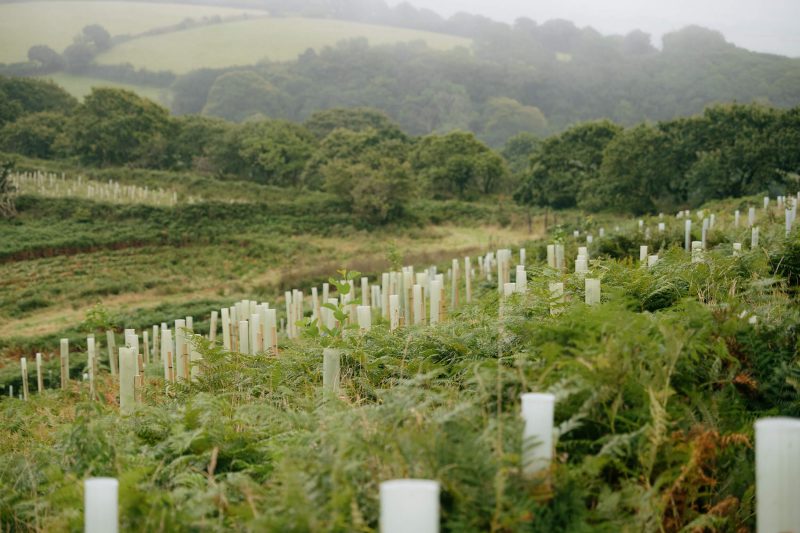
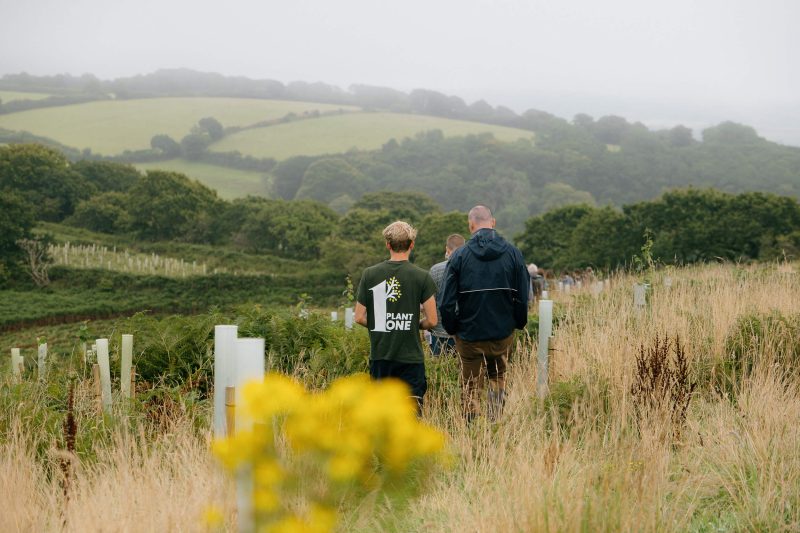
Plant One has a proven model, and years of experience in restoring temperate rainforest.
Over the next five years, we’re aiming to plant 500 hectares of fish forests across Cornwall.
With your support we can restore this lost connection, get the flowscapes flowing again, and help our seas and our trees thrive once more.
ADD BIBLIOGRAPHY
These are the scientists, storytellers and ecologists at the heart of the No Trees No Seas movement.
Rai Lewis
Co-founder
Dr Ian Hendy
Dr Lissa Batey
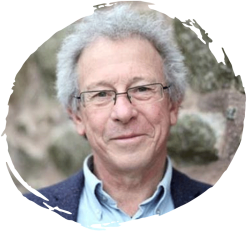
Chris Hines MBE
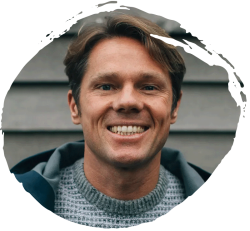
Dr Sam Bleakley
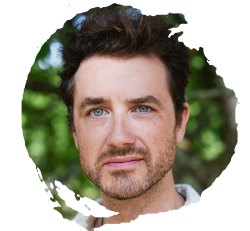
Sam Crosby
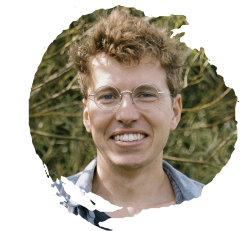
Sam Manning
Wyl Menmuir